

You’re Not Weak, Nicotine Is Strong
You’re Not Weak, Nicotine Is Strong: Changing the Story You Tell Yourself About Quitting

If you’ve ever tried to quit and ended up smoking again, you’ve probably said things like:
“I have no willpower.”
“I clearly don’t want it enough.”
“I’m just meant to be a smoker.”
Those thoughts hurt more than the cravings. They don’t just sting in the moment – they slowly convince you there’s no point trying again. That’s why your mind and mood are just as important as your lungs and heart when you quit.
This isn’t about pretending quitting is easy. It’s about seeing what’s really going on and changing the story you tell yourself about it.

The Hidden Weight of “I’m a Failure at Quitting”
Most smokers aren’t just dealing with nicotine. They’re also carrying years of quit attempts that didn’t last, promises they feel they broke, and comments from people around them. Over time, that turns into a story:
“I always mess this up.”
“I can’t stick to anything.”
“Why bother? I know I’ll end up smoking again.”
The problem is that this story makes quitting feel impossible before you even start. One slip quickly becomes proof that you were “right” about yourself all along. You stop seeing any of the progress you’re actually making and only see the moments you smoked.
Changing that story is a big part of changing your relationship with smoking.

Nicotine addiction is not a character flaw. It’s a predictable reaction to a powerful drug.
When you smoke or vape, nicotine reaches your brain in seconds. It triggers feel-good chemicals like dopamine and gives you a short-lived sense of relief, focus, or calm. Over time, your brain learns that nicotine is the “fix” for stress, boredom, sadness, awkward moments, almost anything uncomfortable. Eventually you’re not using it to feel good, you’re using it just to feel “normal.”
At the same time, smoking weaves itself into your daily routine: with coffee, after meals, during breaks, on the way to work, outside with friends. So when you try to quit, you’re not just giving up a habit. You’re going against brain chemistry, daily routine, emotional coping and, often, social pressure.
Given all of that, the real question isn’t “Why can’t I just stop?”
It’s “How did I ever expect to do this with willpower alone?”

Rewriting the Voice in Your Head
The way you talk to yourself while quitting has a huge impact on whether you keep going or give up.
Instead of “I’ve failed so many times, I’m useless at this,” a more honest version might be: “I’ve tried many times. That means I care about quitting. I just haven’t had the right support and plan yet.”
Instead of “I had a cigarette, I’ve ruined everything,” you could tell yourself: “I slipped once. That doesn’t erase all my effort. I can look at what triggered it and carry on.”
Even “I’m horrible without cigarettes” can be softened to: “I’m more on edge while my brain adjusts. That’s temporary. I’m working on better ways to handle it.”
You don’t have to be unrealistically positive. You just need to stop speaking to yourself in a way that makes change impossible.

Looking at Progress in a More Realistic Way
Most people judge a quit attempt with one harsh question: “Did I smoke or not?”
If the answer is yes, even once, they stamp the entire attempt as a failure.
But quitting rarely looks like a perfect straight line. It often looks messy: good days, bad days, stretches where you don’t smoke at all and moments where you slip. Someone who used to smoke twenty a day and now sometimes smokes five is still moving in the right direction. That’s not the end goal, but it is progress.
You can start noticing different kinds of wins: days you went without smoking, cravings you rode out, times you chose not to smoke even though you wanted to, and how quickly you got back on track after a slip. When you see progress in those terms, it’s much easier to keep going.
Giving Yourself Permission to Try Again

A lot of people feel like they’ve “used up” their chances. They’re embarrassed to say they’re quitting again because they’ve said it before. They don’t want to disappoint themselves or others one more time.
Trying again isn’t embarrassing. It’s proof you haven’t given up on yourself.
This time, you can decide that you’re not relying on willpower alone. You can use proper tools, strategies and support. You can decide in advance that if you slip, you’ll reset instead of throwing the whole quit away.
You’re not starting from zero. Every past attempt has taught you something: what triggers you, what times of day are hardest, what kind of support helps and what doesn’t. That’s not a weakness. That’s experience.
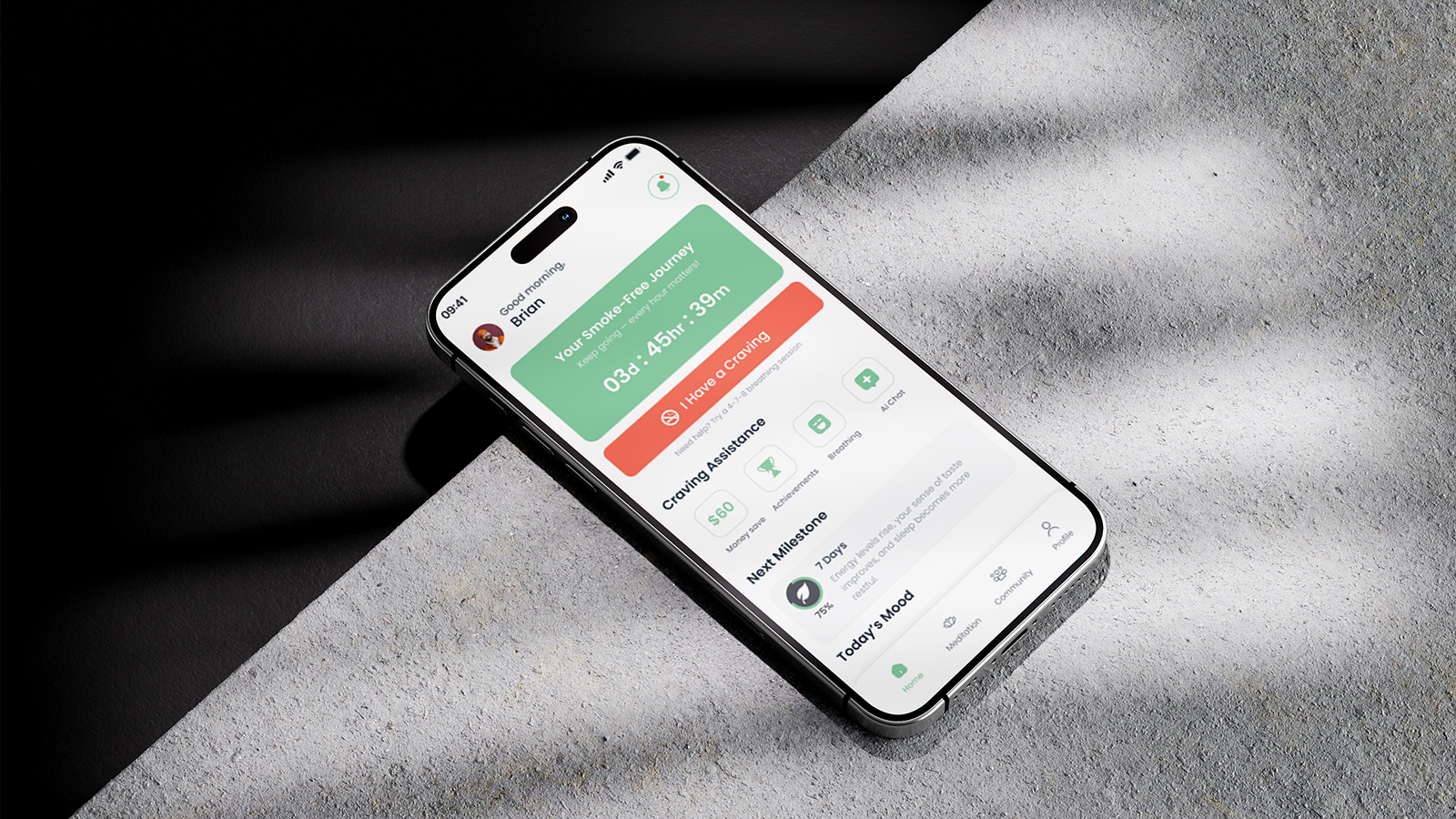
Unpuff isn’t just about counting how many cigarettes you don’t smoke. It’s designed to support the mental side of quitting as much as the physical side.
Inside the app, you can see progress beyond “perfect or failed.” You can watch your smoke-free days, cigarettes avoided and money saved increase over time, even if things haven’t been perfect.
When you do slip, Unpuff doesn’t treat it like the end. You can log what happened, look at what triggered it and adjust your plan, instead of deciding the whole attempt was pointless. You also get access to short exercises and calming tools you can use when your thoughts start spiralling or your mood dips, so you’re not stuck alone with guilt or frustration.
On tough days, seeing your reasons for quitting , your health, your family, your future, alongside your actual progress can be enough to stop the “I may as well go back” voice from winning.
The Story You Tell Yourself Matters
You might have carried the “I’m weak” story for a long time. But the more accurate story sounds more like this:
“I’m someone who has struggled with smoking. I’ve tried, I’ve learned, and I’m trying again. This time, I’m not doing it on my own.”
That’s the mindset Unpuff is built to support: less shame, more progress, and a quit that’s based on understanding, not self-blame.