
It’s Never Too Late to Quit
A lot of smokers carry the same quiet belief:

A lot of smokers carry the same quiet belief:
“I’ve been smoking for so long… what’s the point in quitting now?”
Maybe you started young, and the years have added up.
Maybe you’ve tried to quit before and gone back.
Maybe you already feel the effects in your chest, your stamina or your general health, and it feels like the damage is done.
The truth is very different:
It is never “too late” to quit.
Your body can still benefit, no matter how many years you’ve smoked.
This isn’t wishful thinking. It’s how the body works.
Damage Doesn’t Stop Just Because You’ve Been Smoking for Years
One of the reasons people feel hopeless is the sense that the “worst” has already happened.
“I’ve already hurt my lungs.”
“I’ve already damaged my heart.”
“I’ve already taken years off my life.”
While some damage can’t be fully undone, what often gets forgotten is this:
As long as you keep smoking, the damage continues.
When you stop, that damage slows down or stops getting worse.
You’re not just looking backwards at what’s been done. You’re deciding what happens from today onwards.
Quitting at 30 is better than quitting at 40.
Quitting at 40 is better than quitting at 50.
Quitting at 60 is still better than not quitting at all.
Every year you live smoke-free is one more year your body isn’t being pushed, irritated and poisoned in the way it has been.

Your Body Starts Adjusting Sooner Than You Think
Even if you’ve smoked for decades, your body doesn’t just shrug and give up when you quit. It reacts.
Within a short time of stopping, your heart rate and blood pressure begin to move in a healthier direction. Your blood carries less carbon monoxide and more oxygen. Your lungs start trying to clear the build-up they’ve been dealing with for years.
That doesn’t mean you instantly feel amazing. In fact, the early days can be uncomfortable because of withdrawal and habit changes. But underneath that, your organs are beginning to work under less strain.
Over months and years, this adds up.
You give your body a chance to stabilise instead of constantly fighting uphill.

Long-Term Risk Isn’t All or Nothing
Another myth that keeps people stuck is the idea that risk is fixed:
“I’ve smoked for 20–30 years. If I get ill, I get ill. It’s out of my hands now.”
Health doesn’t work in that all-or-nothing way.
Quitting doesn’t erase the years you’ve smoked, but it reduces your risk going forward. The longer you stay smoke-free, the more your risk of heart disease, stroke and other smoking-related problems drops compared with if you’d carried on.
Think of it like driving too fast for years and then deciding to slow down. You can’t change the miles you’ve already done, but you can absolutely reduce the chance of a crash in the future.
Quitting is you finally taking your foot off the accelerator.
Quality of Life Matters Just as Much as Length

Even if you don’t like thinking about statistics and long-term risk, there’s something more immediate to consider: how you feel day to day.
Quitting can make a difference to:
Being able to walk further, climb stairs more easily, play with children or grandchildren, or simply get through the day without constant coughing is a real, meaningful improvement in quality of life.
That’s true whether you’re 25, 45 or 65.
The Emotional Relief of Letting Go

Health and recovery aren’t only physical. There’s also the mental side.
Many long-term smokers carry a quiet, constant worry about what might happen. A cough, a pain in the chest, a strange feeling in the throat, everything becomes a question mark.
Quitting doesn’t make you immortal, but it does remove one major, active risk from your life. You know that from this point on, you are no longer adding that particular weight to your health.
For many people, that brings a sense of relief. The fear doesn’t vanish overnight, but it changes shape. Instead of “I’m still doing this to myself,” it becomes “I’m finally doing something to help myself.”
That shift is powerful.
“But I’ve Tried Before, and It Didn’t Stick…”

If you’ve smoked for a long time, there’s a good chance you’ve already had a few attempts at quitting.
It’s easy to interpret that as proof you “can’t do it”. In reality, it usually just means you were trying to face years of addiction and habit using willpower alone, without enough support.
Every attempt has still taught you something:
You’re not coming to this fresh and clueless. You’re coming with experience. When you combine that with better tools and a clearer plan, your next attempt doesn’t have to look like the last one.

Small Changes Still Count as Recovery
Quitting doesn’t have to be a dramatic “all or nothing” overnight transformation to be meaningful.
If you go from twenty cigarettes a day to ten, your body feels that.
If you manage a week without smoking when you used to last only a day, your body feels that too.
If you stop waking up in the night for a cigarette or stop lighting up the moment you open your eyes, that’s progress.
Cutting down isn’t the final destination, but it can still be a step in the right direction and a bridge toward a full quit. Every step where your lungs, heart and blood vessels are exposed to less smoke is a step toward recovery.
How Unpuff Supports Health and Recovery at Any Stage
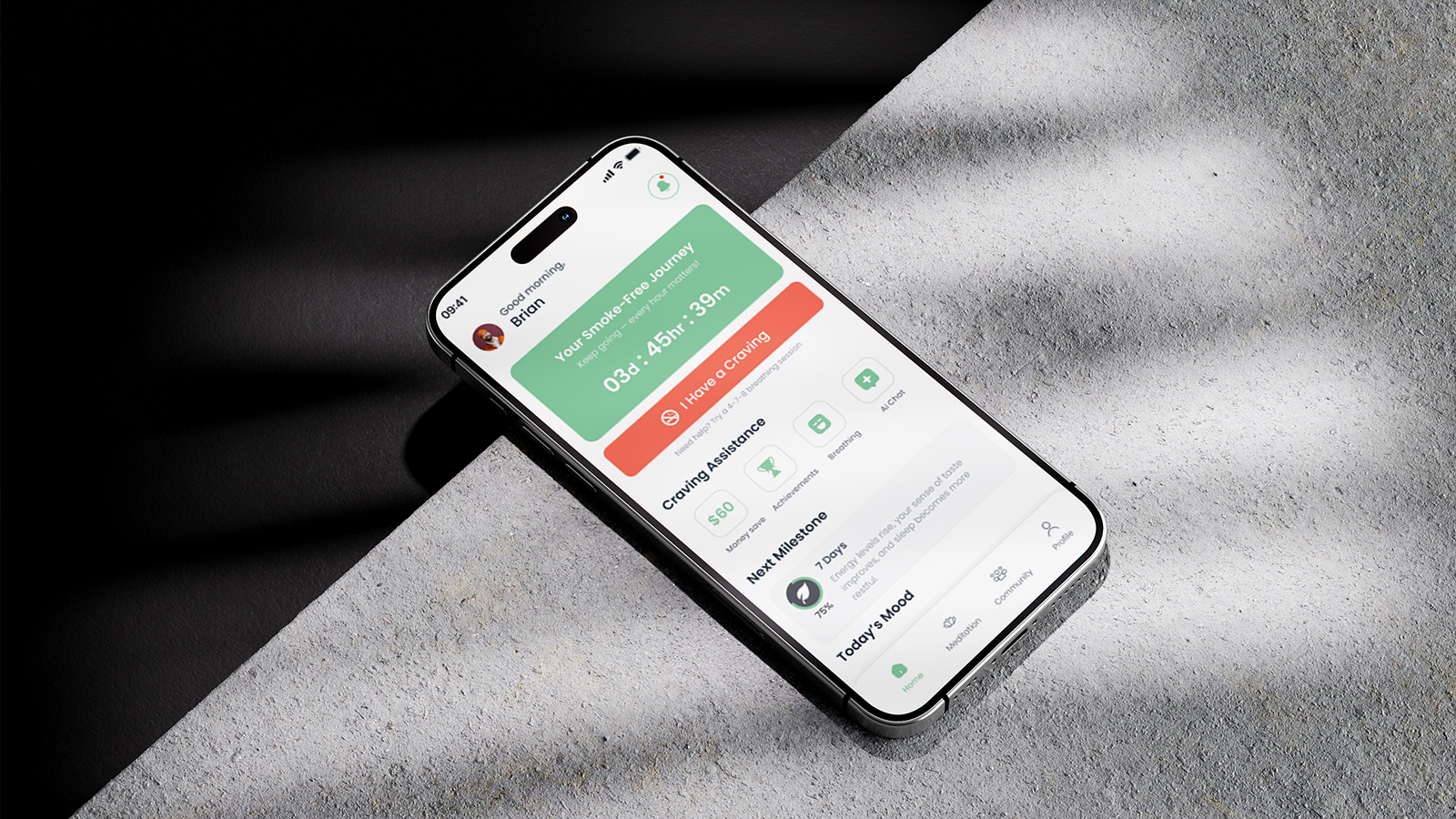
Unpuff is built for real smokers in real life – including those who’ve “been smoking forever” and are scared it might be too late.
The app helps you:
You don’t need to be young, perfect, or on your “first try” to deserve better health.
It is never too late to give your body a break, to reduce the harm going forward, and to claim a better quality of life than smoking can ever offer you.
Quitting now is still one of the most important health decisions you can make and Unpuff is here to support that decision, one day at a time.